Dagmar Heppner (English)

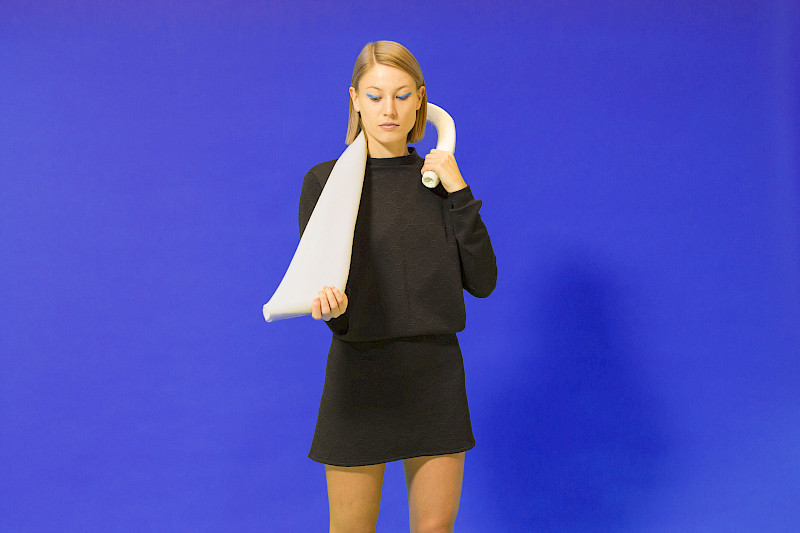
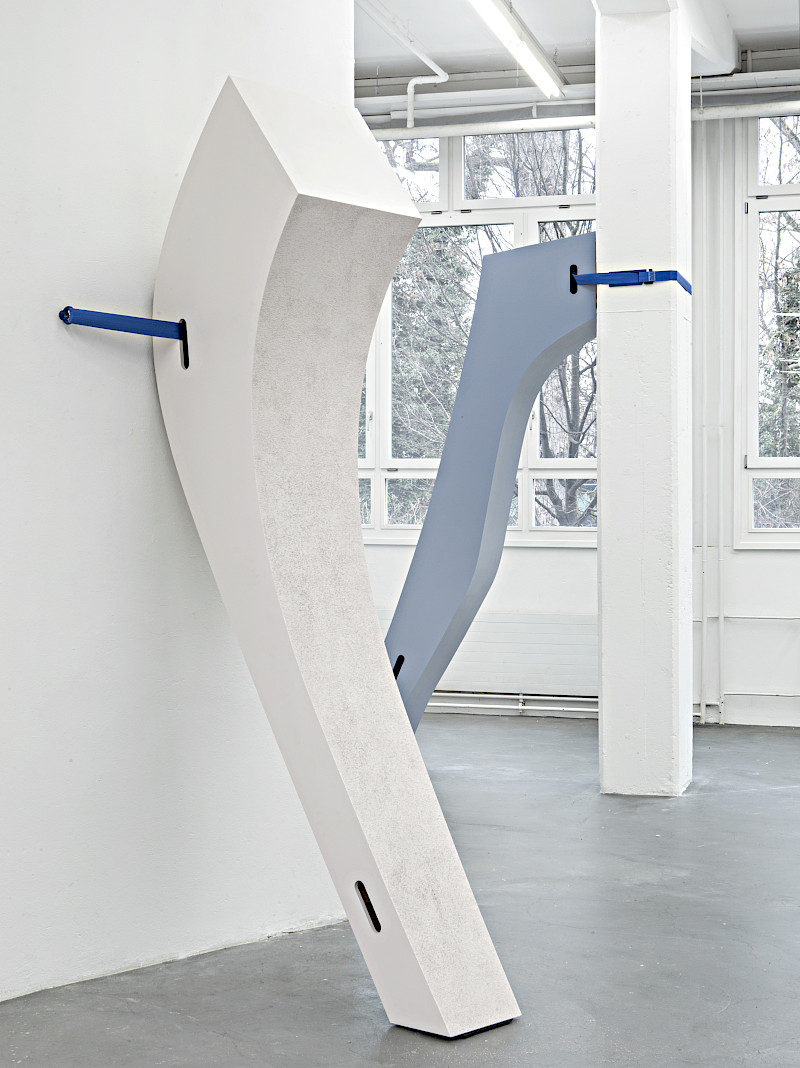
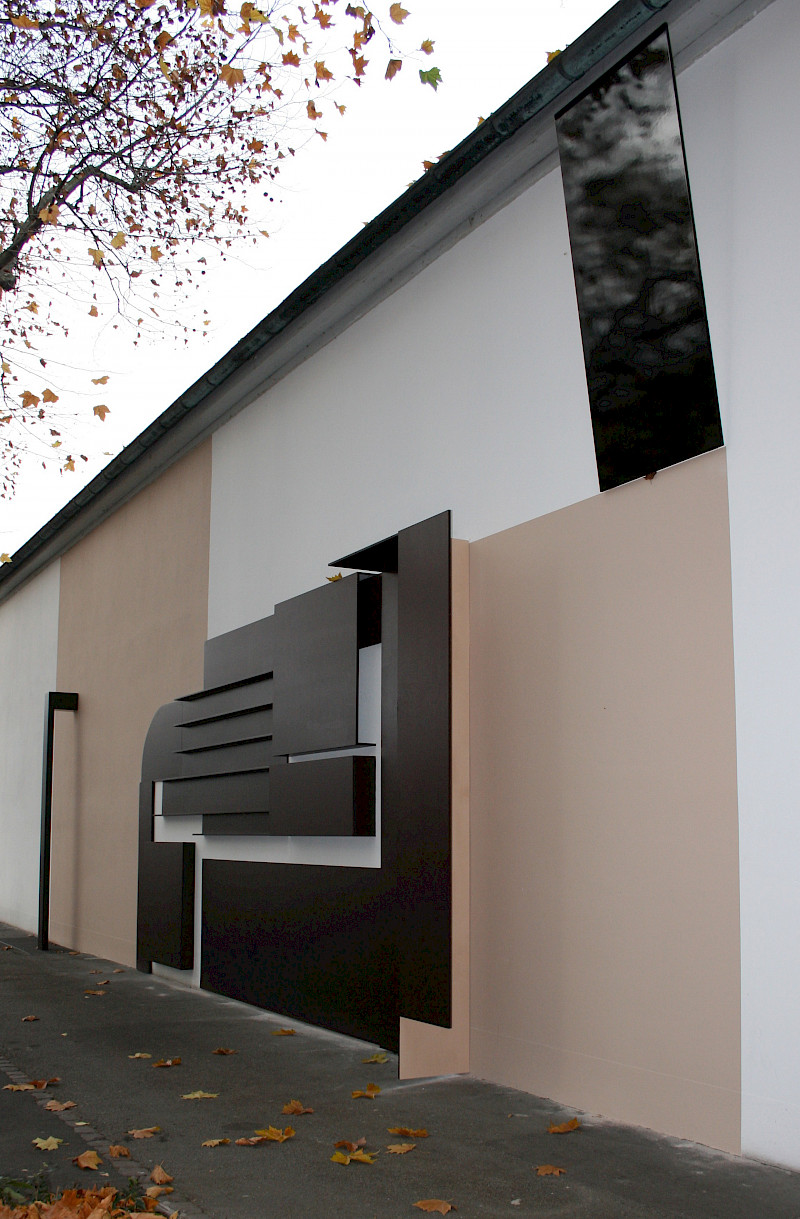
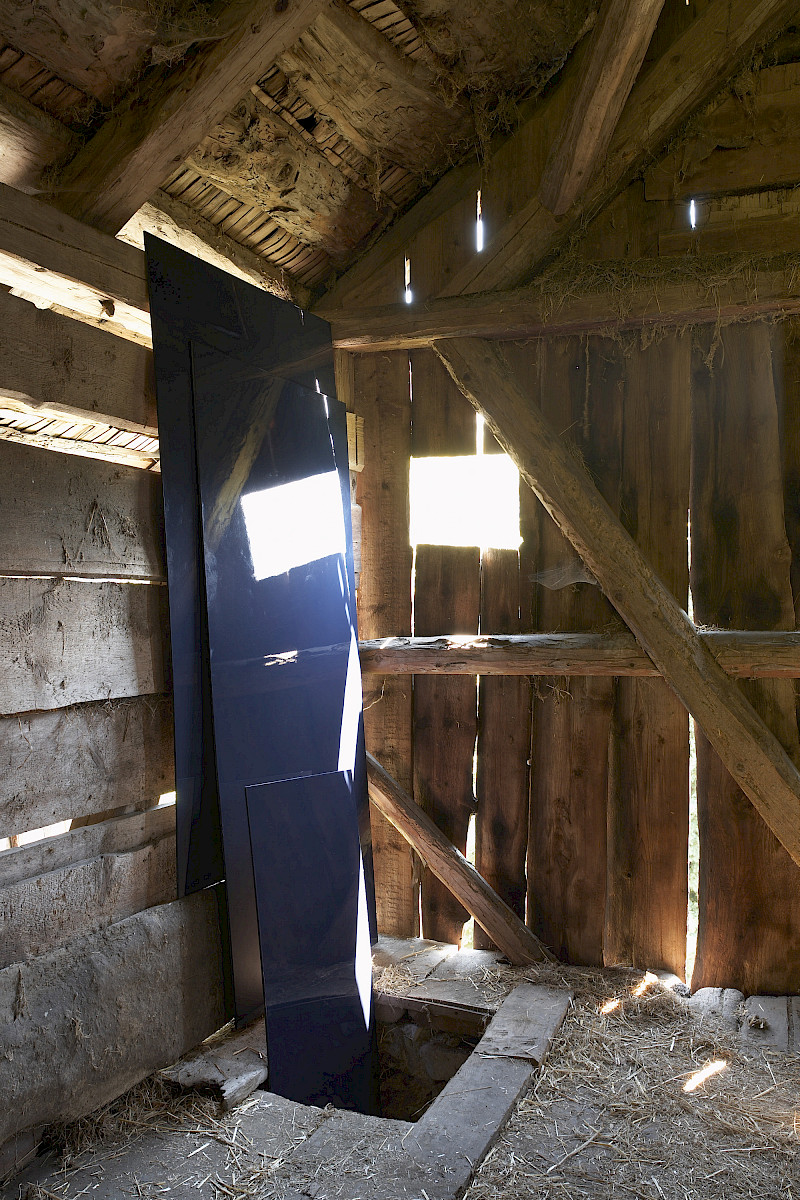
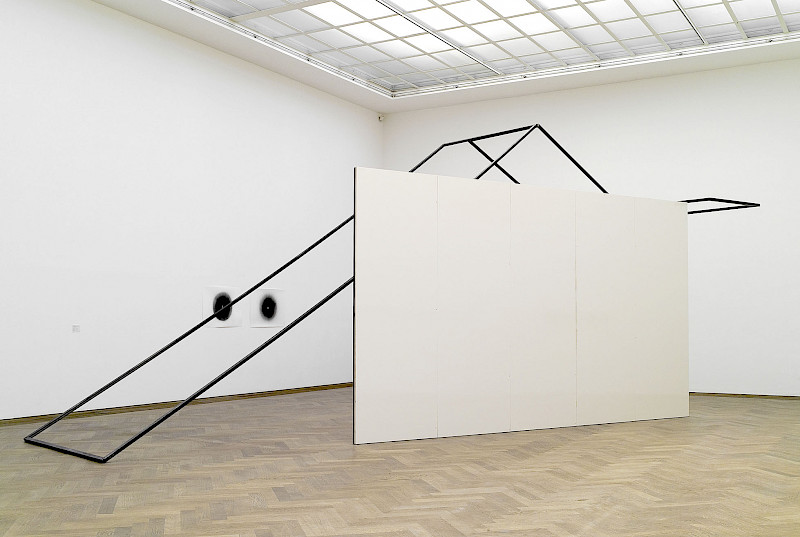
Apart from a few delicate lines, we encounter numerous surfaces. Many of them are covered with mirrors or lacquered in dark, glossy colours. The wooden constructions reflect and have a closed appearance, they seem to turn inwards and away from us, almost autistic, or captured within themselves. They are representations and repetitions of the existing architecture, of volumes and surfaces or simply their abstraction. The dimensions can easily compete with the rooms they inhabit. They adjust to them, occasionally bursting or overcoming them, which makes us shrink and at times threatens us, possibly contributing to our overall feeling of being refused. Other objects are smaller and more familiar in form and size, reminding us of things we know: architectural details, interiors, furnishings.
The constructions take up the different moods and characteristics of the spaces, quote or accentuate them – density appearing more dense, heights higher. Following the movements of the built-in elements our views and pathways are (re)directed and opened up to what has already been there. After the initial confrontation with the closed surfaces we discover many a niche to step below and behind, where ideas of retreat and privacy become possible. Additionally, scattered movable elements appear  accommodating the feelings that alternate between aggression and protection, big and small, inside and outside: wooden plates are fixed with hinges, lathes connected with versatile joints. In general, things become more flexible and – theoretically – more touchable, easier to handle. Recently, the preferred finishes have become increasingly colourful, remaining decent and keeping an elegant distance though. In their red or yellow tones and where the actual texture, colour and grain of the wood is visible and perceptible, the surfaces become permeable, almost soft and warm. Here we can be at one with ourselves. However, what we see is neither our self nor a real or tangible object; it is an abstract formation that contains the surroundings, as well as figurative and objective matter as hesitant images – if at all. Somehow we are left alone with these ideas of furniture, objects, built-in forms and components that seem to have developed a strange life of their own – and with an ambivalent feeling between the intimate and the unknown they stir within us, which at the same time has always been there.

Dagmar Heppner, 2010