Ingo Gerken (English)
Word file
Karin Hueber hollows out spaces and jacks them up. She produces hard echoes that do not respond simply, but cross a materially thought-out emptiness. Even when they have fallen silent, they are not soft. They remain sharp, precise and angular.
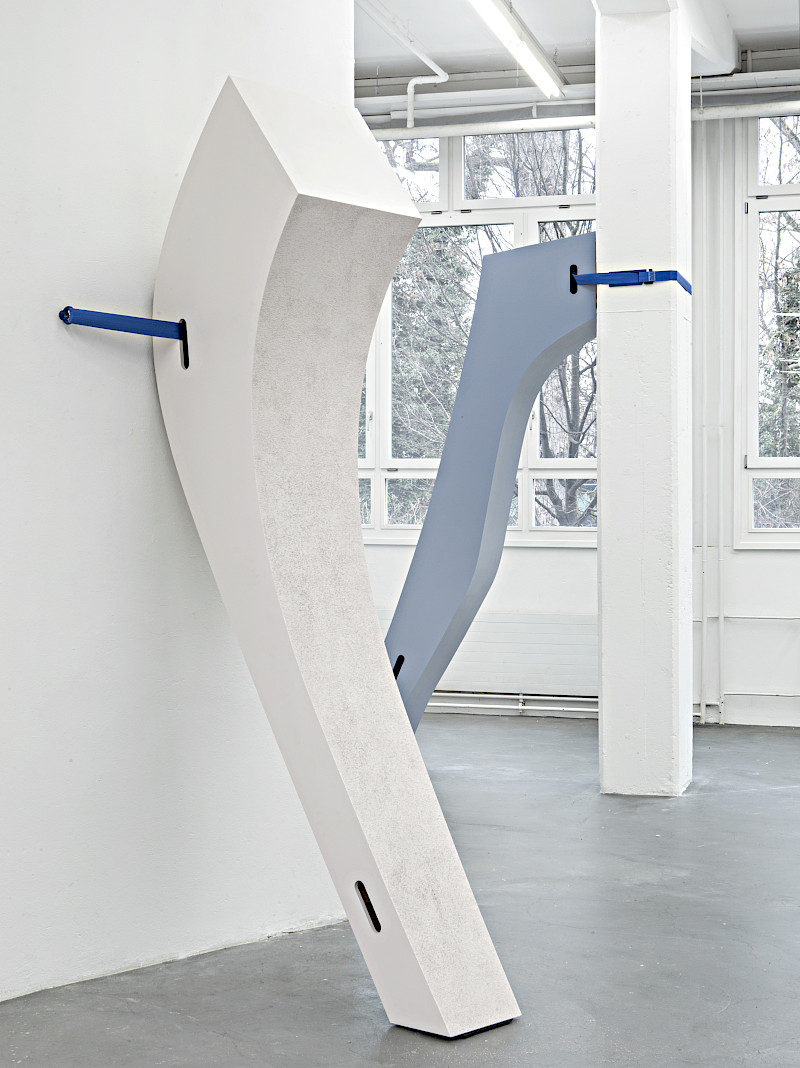
The works are sculpturally constructed folds and contortions that carry a place within them, gather it into itself, and then turn to meet it on the offensive. Abstract walls/surfaces/containers supporting themselves on structures adjacent to, behind, or under them to get into position. Architectonic bodies placed upright that put a huge load on themselves and rest precariously in themselves, and thus (in their own extreme presence) indicate different spatial connections in which they (now) stand and come into being.
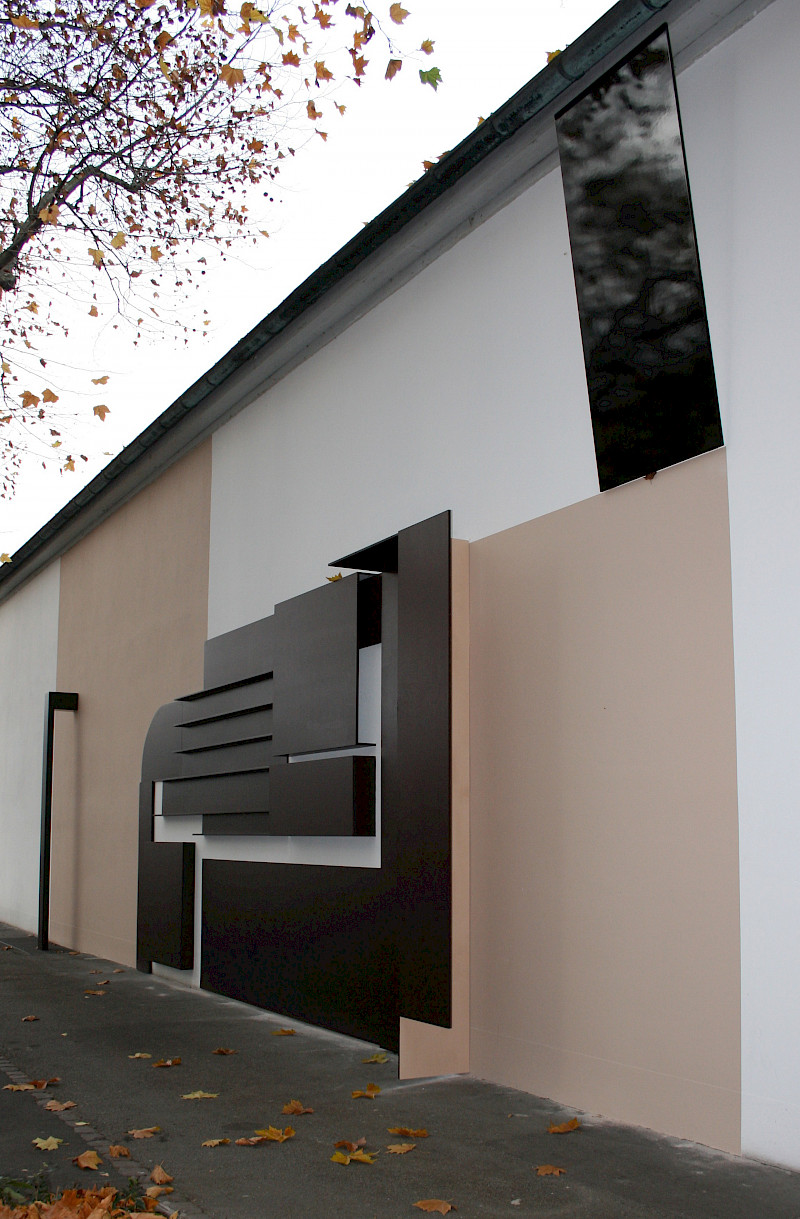
Hueber formulates local references that are at an analytical distance, and as installative agencies they question the elementary facts regarding their reality, casting doubt on them and redefining them physiologically and psychologically. She constructs deconstructive spatial models that appropriate the ground plan of their surroundings, which she translates into a single, unwieldy resistance. That resistance remains purposeless. Therefore autonomous.
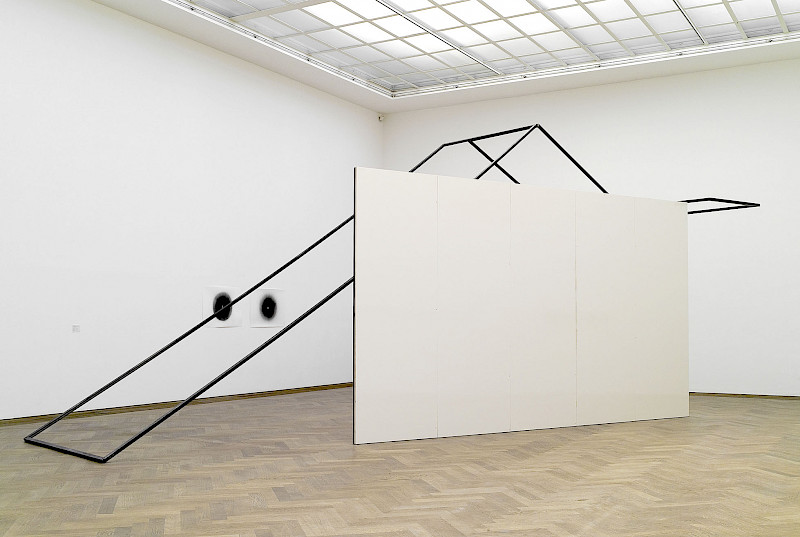
But it consistently proclaims a new spatial order and generally claims the whole area, as it also continues immaterially and fans out, right into abandoned corners. It forms strictly calculated constrictions, slanting concentrations and open planes, which are reflected atmospherically and can be palpably threatening in effect.
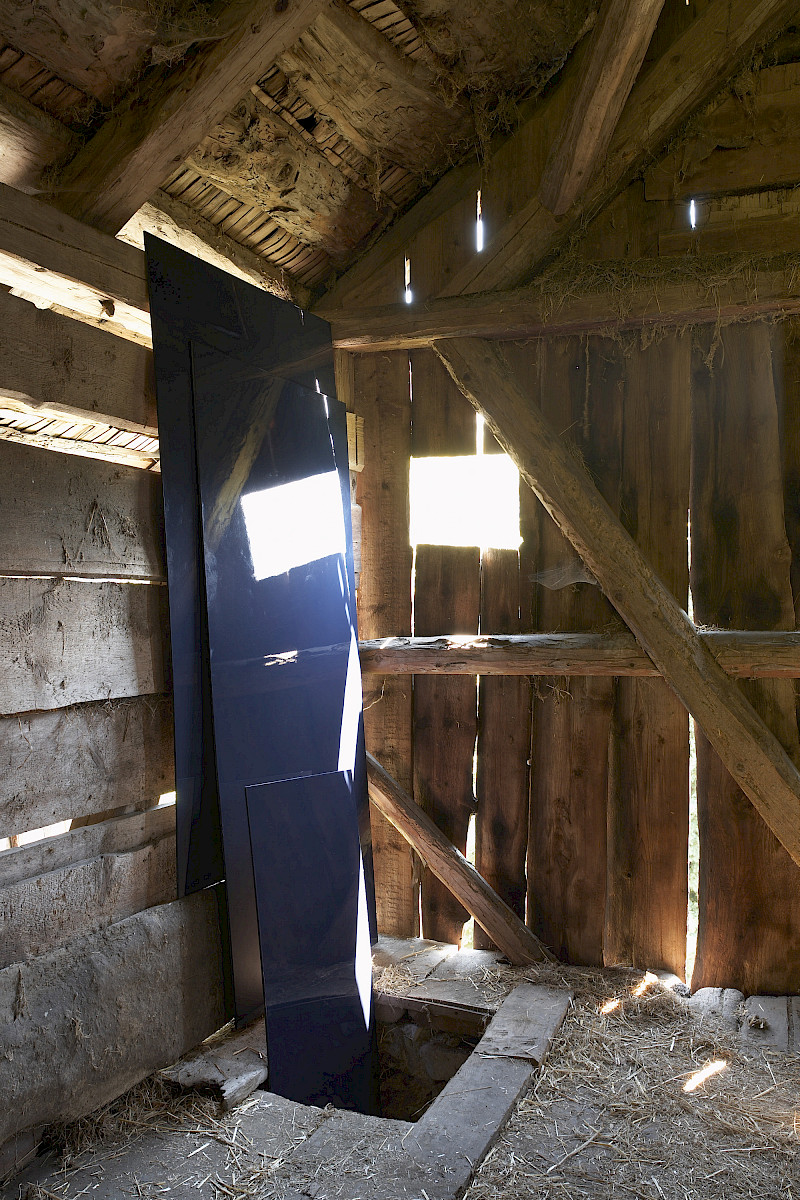
This existential and critical dimension is also mirrored in the materiality and substantiality of the surfaces. Often they are used panels, worn out, worn smooth, which are reassembled here into concrete form. In parts (beguilingly) ennobled and glowingly polished, in others simply left rough, they generate monochrome contraction fields, and allow a deliberate uncertainty between precise perfection and cunningly improvised Minimalism.
The buildings and their offshoots treat the problems of static identities distrustfully, and thus also wobble seriously on the hierarchical formats of Modernism. They feel their way forward into dominant structures and question their self-evidence with elegantly reticent aggressiveness. Hueber´s confrontational decomposition processes lead to a renewed, much more fragile system of coordinates, with which we can and must open up anew the spaces in which and through which we move as viewers.
Ingo Gerken, 2008
(Translated from German by Judith Hayward)